
I watched Food Inc. Friday night and found it very interesting and insightful. What I found so interesting though, wasn’t necessarily the point of the documentary. The point was to expose the food we eat and how it may not be the healthiest because of the way its grown/raised and brought to market. While that was eye opening, I believe this is only a symptom of a larger problem. That problem being the way those businesses are run and to a larger point the way business is run in general.
In an effort to cut costs and raise profits, our food has become a mass produced commodity. To a large degree most of the American economy has become the same thing. Gone are the days of creating the best product you can possibly create and if you are the best, making a nice profit. The end goal has become profit, which has sent a shock wave down the supply line. It doesn’t matter if you make the best product anymore. If you create a decent product at a cheap price, people will buy it, you will make big profits and the cycle continues.
This has slowly eroded the point of business in my eyes. The point of business shouldn’t be to make money. The point of business should be to create the best product/service possible. In doing that, your product/service will be the category leader and thus, profit will be created. Not only does this build trust with the consumer, it builds trust within the company and only makes a company stronger.
From an advertising perspective I think a change in the way businesses are run would improve advertising. When companies start cutting costs, one of the first places they go is advertising. But if the goal isn’t to be the cheapest, but to create the best product, you can invest in advertising, make it part of the product and in the end have a better product.
I understand the need to control costs and I know it sounds like I’m pushing advertising, but I’m not. A holistic change of business, shifting the almighty goal from profits to product greatness would alleviate the need for cut throat pricing, by giving the consumer a choice of greatness, not a choice of price.
Maybe this will happen naturally through the “open market”. The organic foods market is one market showing signs of people choosing the great product over the lower price. If more segments followed in their footsteps, I think business, as a whole would be improved.
What do you think about profits being the end goal for a business? Am I just being naive in thinking about the greater good?
-Dennis
Showing posts with label Account Executive. Show all posts
Showing posts with label Account Executive. Show all posts
Monday, December 14, 2009


Tuesday, December 1, 2009
December Resolution. Why not?

While looking at the progress I’ve made with my 2009 resolutions I started thinking about what my New Years resolutions would be for 2010. I ran through the normal list, exercise more often, lose weight, blog more, etc. Then I thought for a minute. Why do I have to wait until January first to start? I don’t have to wait, so I’m not going to. I always get stuck in that nasty cycle of “I’ll start that tomorrow”, but not this time. My 2010 resolutions are starting December First 2009.
So my first, and most important December First resolution is to focus on improving my self as an account person. I know the title of my blog is The Ultimate Account Guy. I hope to one day become that, but for right now I’m focused on improving my skill set everyday.
Since today is day one, I want to know from all of my creative friends out there, what is the number one thing, in your mind, that makes an effective account person? It could be a positive attribute that I should follow or a negative attribute that I should avoid. Either way, I just want to know what is essential to being an effective account person in the minds of a creative team.
-Dennis
Tuesday, November 10, 2009
Reading Adventure
I try to read a lot and on a wide variety of subjects. I just finished The Long Tail and since this book has been out for a number of years now I won’t give you a review. I did however find it amazingly interesting to see how the elements Chris Anderson spoke about are coming true today. Also, I am very interested to see how advertising will reach people as they become more and more niche-centric. If you haven’t already read this book, I highly suggest you check it out.
The main reason for this post though, is to talk about my newest reading adventure. I’ve decided I need to read some classics. I’ve chosen The Republic and Moby Dick as my first two. Both books come recommended by people I highly respect and from what I hear, they are both massive reads.
I’m very excited by both of these books, which is very different from how I used to think about these types of books. I used to approach books of this type with dread. In the past (read – during school), I would be faced with having to read a book like this and just shut down. I wouldn’t even try to read it. Now, I’m taking this on under my own accord. I’m taking this as a sign of intellectual maturity, or at least the desire for intellectual maturity.
First up, I’m going to attack The Republic which was recommended to me by Jim Mitchem . I’m going to take my time. Read it, digest it and hopefully understand enough to learn from it. And even if I don’t, I’m going to be happy in the effort of doing something I’ve never done before.
So my question to you is, what is the best way to approach a book like this? Have you read The Republic, any advice on my adventure?
- Dennis
Full Disclosure – I have no affiliation with the authors of these books or the publishers.
The main reason for this post though, is to talk about my newest reading adventure. I’ve decided I need to read some classics. I’ve chosen The Republic and Moby Dick as my first two. Both books come recommended by people I highly respect and from what I hear, they are both massive reads.
I’m very excited by both of these books, which is very different from how I used to think about these types of books. I used to approach books of this type with dread. In the past (read – during school), I would be faced with having to read a book like this and just shut down. I wouldn’t even try to read it. Now, I’m taking this on under my own accord. I’m taking this as a sign of intellectual maturity, or at least the desire for intellectual maturity.
First up, I’m going to attack The Republic which was recommended to me by Jim Mitchem . I’m going to take my time. Read it, digest it and hopefully understand enough to learn from it. And even if I don’t, I’m going to be happy in the effort of doing something I’ve never done before.
So my question to you is, what is the best way to approach a book like this? Have you read The Republic, any advice on my adventure?
- Dennis
Full Disclosure – I have no affiliation with the authors of these books or the publishers.
Wednesday, October 28, 2009
Sheer Joy
When I first saw this video it gave me goose bumps. The joy the players are experiencing led me to send out a tweet proclaiming, “This is what college football is all about”. I then went for a run and during my run I realized this moment caught on camera is so much more than a great football moment.
This is a moment that everyone should experience. It reaches beyond sports. It’s a moment shared with your kids when they get an A on a test. It’s a celebration after a promotion or winning an unexpected account. It’s finding those moments in life when you get to be David and slay your Goliath. Most importantly it’s a moment that I don’t see very often outside of the sports world. You see athletes celebrate after they win a big game or a championship. But you never see a group of people in suits jumping up and down.
This could be for any number of reasons. It’s not professional; it’s not practical (being in suits and all), celebrating is childish, the list goes on and on. I think the real reason is very few people care about their career as much as these young men care about football. Maybe if we all cared about our jobs as much as they did, we would celebrate a little more.
So my question to you is, when was the last time you celebrated like the Iowa State Cyclones? Is it appropriate to celebrate like that as an “adult”?
-Dennis
Monday, October 26, 2009
Fear – Motivator or Restrictor?
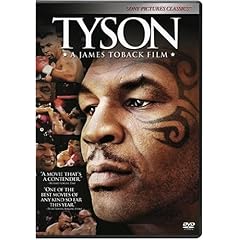
I recently watched the new Tyson documentary. Besides being an interesting take on a very complex individual, it revealed a side of Tyson I had never seen before. The big theme throughout the film was fear. Early in his career, Tyson used fear as a motivator. He was afraid of being embarrassed. He feared embarrassing himself in front of millions of people by losing a fight. So he used that fear to push himself to train harder.
Later in his career, after his release from jail for a rape conviction, fear changed for him. He was no longer afraid of losing or being embarrassed. He was afraid of being betrayed by those closest to him. He no longer trusted anyone after his (in his mind, false) rape conviction. The fear that once molded him into one of the badest men in the world, now became his demise.
This got me thinking about fear and how it affects everything. Everyone has fears that shape their lives. Fear of commitment, fear of moving to a new city, fear of moving to a new job, fear of taking a risk, fear of not taking a risk; you name it, someone has a fear of it. The thing I find most interesting is the difference between people who use fear as a motivator and people who allow their fears to hold them back.
Fear plays a big roll in business. The good companies seem to use fear as a motivator to try new things. Attacking the competition or going after a new target market, could open your product to a new line of consumers. Going with the new campaign, even though it might alienate a few members of your current customer base, takes a healthy control of fear. And if the new campaign is a total flop, using that fear to learn from it and make sure it doesn’t happen again is key to managing fear in the future.
So my question to you is how do you handle fear? Do you use your personal fear to make you better? Do you use the fears of your clients to make them better?
-Dennis
Monday, October 12, 2009
A Car Dealer Commercial That's Worth Watching
Stevinson Automotive takes the traditional car dealer ad and puts it on its head. They prove a car dealership commercial doesn’t have to scream deals at the consumer to get their point across. Stevinson uses a combination of the three commercials below to inform the consumer of a different car buying experience. One in which you don’t to feel like you are being taken advantage of. One in which you don’t have to dread going to the dealership and dealing with shark like salesmen.
The commercials use humorous situations to convey the main idea that car dealerships don’t have to be scary. They also do a great job of integrating useful brand-building information along with the humor. The commercial above informs the consumer that Stevinson Auto has been around for 47 years. That builds trust with the consumer. If they’ve been around for 47 years they must be doing something right.
The above commercial focuses on used cars and the fact that Stevinson Auto only sells car fax certified used vehicles. Again, trust is developed through the sense of humor and facts within this commercial.
This final commercial does a great job of communicating brand-building elements to the consumer. The use of the “diabolical theme music” and counter points of honesty, allow the consumer to both enjoy the commercial and raises the Stevinson brand in their mind.
In my mind these commercials do a great job both together and separately. They mix humor and important brand building elements to differentiate themselves from the rest of the car dealerships and from the idea of a car dealership in the mind of the consumer.
What do you think about these commercials? What other industries with negative connotations could use an approach like this?
-Dennis
The commercials use humorous situations to convey the main idea that car dealerships don’t have to be scary. They also do a great job of integrating useful brand-building information along with the humor. The commercial above informs the consumer that Stevinson Auto has been around for 47 years. That builds trust with the consumer. If they’ve been around for 47 years they must be doing something right.
The above commercial focuses on used cars and the fact that Stevinson Auto only sells car fax certified used vehicles. Again, trust is developed through the sense of humor and facts within this commercial.
This final commercial does a great job of communicating brand-building elements to the consumer. The use of the “diabolical theme music” and counter points of honesty, allow the consumer to both enjoy the commercial and raises the Stevinson brand in their mind.
In my mind these commercials do a great job both together and separately. They mix humor and important brand building elements to differentiate themselves from the rest of the car dealerships and from the idea of a car dealership in the mind of the consumer.
What do you think about these commercials? What other industries with negative connotations could use an approach like this?
-Dennis
Friday, September 25, 2009
Syracuse Gives Game Ball To The Fans
Syracuse as a football team has struggled to win games recently. As no surprise to anyone, they have also struggled to get fans into their stadium on game day. In an effort to build excitement around their new head coach, they are reaching out to their fans in a unique way.
Through this video, Syracuse head coach Doug Marrone gives the game ball to the Syracuse fans after their last second 37-34 win over Northwestern. I like this both from an advertising and a fans perspective.
As an Account Executive, I like the timeliness and relevance of the communication. I found this video, posted on the SU athletics YouTube page, two days after the game. This shows me they are actively planning and capturing natural, enthusiastic moments that come from within the brand. They don’t need to create a false story to gain interest.
As a fan (I mean the general fan, I don’t actually cheer for Syracuse athletics) this video shows me that Syracuse football is dedicated to and appreciative of the excitement their fans bring to a game. Especially in a smaller dome like the one Syracuse plays in, the fans can have an impact on the game. It’s refreshing for a fan to feel like they are a part of the team, instead of just being a money sign sitting in a seat.
What do you think about this video? What other brands use organic, exciting moments that come from within their organization to garner excitement?
- Dennis
Through this video, Syracuse head coach Doug Marrone gives the game ball to the Syracuse fans after their last second 37-34 win over Northwestern. I like this both from an advertising and a fans perspective.
As an Account Executive, I like the timeliness and relevance of the communication. I found this video, posted on the SU athletics YouTube page, two days after the game. This shows me they are actively planning and capturing natural, enthusiastic moments that come from within the brand. They don’t need to create a false story to gain interest.
As a fan (I mean the general fan, I don’t actually cheer for Syracuse athletics) this video shows me that Syracuse football is dedicated to and appreciative of the excitement their fans bring to a game. Especially in a smaller dome like the one Syracuse plays in, the fans can have an impact on the game. It’s refreshing for a fan to feel like they are a part of the team, instead of just being a money sign sitting in a seat.
What do you think about this video? What other brands use organic, exciting moments that come from within their organization to garner excitement?
- Dennis
Wednesday, July 22, 2009
An Open Letter To Under Armour
Under Armour, I am your biggest fan. I love your product, follow you on Facebook and Twitter, and I am an overall ambassador for your brand. I have recently decided to get back into shape, which got me thinking. Where is your customer engagement?
There is no community aspect to Under Armour. Your Facebook and Twitter accounts are used as broadcast mediums. Your website is great for shopping. It is easy to navigate and intuitive, but there is no place for me to trade training stories with your other customers.
Imagine if you started a conversation with your followers on Twitter or Facebook? What would happen to your brand if you engaged your fans? If you made your customers feel like they are a part of something bigger. If Under Armour were more than just amazingly comfortable and functional gear for athletes you would have a tidal wave of excitement from your fans.
Use Twitter to send out an update on your newest technology breakthrough, not to send me a 10% of coupon. I can get that same 10% from your website before I check out. Take the honor of being invited directly in front of my face, in a preferential position and use it to engage me.
Use your website as place for me and other Under Armour faithful to chat, exchange stories and build a relationship with each other and your brand. Right now I only go to your website when I want to by something. If I was going to your site daily to talk on a message board, I may be more likely to buy more gear.
Personally, I don’t care if all you did was sell gear. I love your product so much I would buy it with or without any changes. However most people don’t feel the same way I do. Building a community and giving current and potential customers something beyond your products can do nothing but help your brand.
-Dennis
There is no community aspect to Under Armour. Your Facebook and Twitter accounts are used as broadcast mediums. Your website is great for shopping. It is easy to navigate and intuitive, but there is no place for me to trade training stories with your other customers.
Imagine if you started a conversation with your followers on Twitter or Facebook? What would happen to your brand if you engaged your fans? If you made your customers feel like they are a part of something bigger. If Under Armour were more than just amazingly comfortable and functional gear for athletes you would have a tidal wave of excitement from your fans.
Use Twitter to send out an update on your newest technology breakthrough, not to send me a 10% of coupon. I can get that same 10% from your website before I check out. Take the honor of being invited directly in front of my face, in a preferential position and use it to engage me.
Use your website as place for me and other Under Armour faithful to chat, exchange stories and build a relationship with each other and your brand. Right now I only go to your website when I want to by something. If I was going to your site daily to talk on a message board, I may be more likely to buy more gear.
Personally, I don’t care if all you did was sell gear. I love your product so much I would buy it with or without any changes. However most people don’t feel the same way I do. Building a community and giving current and potential customers something beyond your products can do nothing but help your brand.
-Dennis
Wednesday, June 24, 2009
Perfectly Targeted Natural Light Commercial
I saw this commercial over the weekend and I was immediately hit with a flashback. I could smell the aroma of stale, three day old beer. The image of waking up to roommates and other people I didn’t know sleeping on the floor. I was brought back to a simpler time in my life. A time when a 12 pack of Natural Light was dinner on a Friday night. A time when I would sit on the couch and have beers thrown at me so I didn’t have to get up. As I watched this commercial I felt like they had rewound my college life and put it on TV.
Natural Light has put a spot light on their target audience with this commercial. There are no fancy parties, no glasses of wine, there isn’t even a bottle of beer in this commercial. Natural Light in a can is joke to many people. To their target audience a Natty Light in a can is an inexpensive, crisp, clean tasting night with your friends. You don’t have to worry about which fork to use, or which glass in front of you is for water. You sit back and enjoy the beer and your friends.
The natapult is a great extension of the emotional connection formed by the commercial. I can remember multiple times when I didn’t want to get up at a party or while watching a football game because I knew my seat would be stolen while I grabbed another beer or some more chips. This commercial puts a humorous yet realistic spin on a situation the target audience can relate to.
This commercial is perfectly targeted for the Natural Light audience. I was captured the second the commercial came on TV. However, it is very heavy on the emotional connection. Having a rational connection mixed in may have made the commercial a little stronger for a viewer who doesn’t have the strong connection to the product that I do.
What do you think about this commercial? Does it have the same effect on someone who doesn’t have a strong previous connection with the brand?
-Dennis
Natural Light has put a spot light on their target audience with this commercial. There are no fancy parties, no glasses of wine, there isn’t even a bottle of beer in this commercial. Natural Light in a can is joke to many people. To their target audience a Natty Light in a can is an inexpensive, crisp, clean tasting night with your friends. You don’t have to worry about which fork to use, or which glass in front of you is for water. You sit back and enjoy the beer and your friends.
The natapult is a great extension of the emotional connection formed by the commercial. I can remember multiple times when I didn’t want to get up at a party or while watching a football game because I knew my seat would be stolen while I grabbed another beer or some more chips. This commercial puts a humorous yet realistic spin on a situation the target audience can relate to.
This commercial is perfectly targeted for the Natural Light audience. I was captured the second the commercial came on TV. However, it is very heavy on the emotional connection. Having a rational connection mixed in may have made the commercial a little stronger for a viewer who doesn’t have the strong connection to the product that I do.
What do you think about this commercial? Does it have the same effect on someone who doesn’t have a strong previous connection with the brand?
-Dennis
Tuesday, June 23, 2009
Nationwide Insurance iPhone App Commercial Misplaced
Recently Nationwide Insurance has been running a commercial on TV touting its car accident iPhone app and everything it can do. I think this app is a great creation. It brands Nationwide. It shows their current customers that they care enough to go the extra mile and create something specifically for them. It also shows prospective customers that they have something other insurance companies don’t. I just don’t understand why they would spend the money to make and air an entire TV commercial dedicated to this app.
I’m not against TV. I think TV advertising has its place and will for a long time. But it should speak to the people watching TV. Most people watching TV don’t have an iPhone or interest in the technology. I think Nationwide would have been better suited with a rational benefit to draw in a wider swath of people and drive them to their website. Once you get them to the website, you can drive people interested in the iPhone and the app to a special section that explains everything available in the app. By doing this you don’t exclude the non iPhone bunch right off the bat.
As a complement to the new TV commercial, Nationwide could run banners on technology centered websites that would be more likely to have people who are interested in an iPhone app. This way the TV commercial reaches a wider audience while still appealing to technology fans by driving them to the website. At the same time they are more focused with their app centered advertising instead of wasting that media space.
You can check out the spot here.
What do you think about this TV spot? Is it a good use of TV space?
-Dennis
I’m not against TV. I think TV advertising has its place and will for a long time. But it should speak to the people watching TV. Most people watching TV don’t have an iPhone or interest in the technology. I think Nationwide would have been better suited with a rational benefit to draw in a wider swath of people and drive them to their website. Once you get them to the website, you can drive people interested in the iPhone and the app to a special section that explains everything available in the app. By doing this you don’t exclude the non iPhone bunch right off the bat.
As a complement to the new TV commercial, Nationwide could run banners on technology centered websites that would be more likely to have people who are interested in an iPhone app. This way the TV commercial reaches a wider audience while still appealing to technology fans by driving them to the website. At the same time they are more focused with their app centered advertising instead of wasting that media space.
You can check out the spot here.
What do you think about this TV spot? Is it a good use of TV space?
-Dennis
Friday, June 12, 2009
Local Friday – Neighborhood Traffic Calming by The City of Greeley
For this week’s Local Friday post I am focusing on a great local commercial done by the City of Greeley to support their Neighborhood Traffic Calming program. For the most part, public service type commercials aren’t very interesting and quickly forgotten. This commercial is different. It is a great commercial because it links the emotional and rational benefits of the commercial for an informative and lasting impression on the viewer.
The goal of this program is to “enhance neighborhood livability and sense of community by reducing excessive speeding and excessive vehicle volumes on local service streets”. This is a great goal benefitting entire communities at no cost to the citizens.
The commercial is effective because it starts out by building a relationship between the mother/son and the viewer. Almost everyone can put themselves into the mother’s shoes. You are busy, trying to get to your next task while changing a radio station or taking something out the glove box. When the second boy runs out in front of the car, fear and worry are used as a hook to keep the viewer focused on the commercial. Once the viewer is sucked in, the public service announcement is given.
This style of building the anticipation then delivering the message to the viewer works better than coming on to the screen and talking about the message. It’s very easy to tune out a message when you have no connection to it. By building an emotional benefit into the beginning of the spot, the rational benefit is more impactful.
What do you think about this commercial? Do public service style commercials get their point across?
-Dennis
Check out the Neighborhood Traffic Calming program here.
The goal of this program is to “enhance neighborhood livability and sense of community by reducing excessive speeding and excessive vehicle volumes on local service streets”. This is a great goal benefitting entire communities at no cost to the citizens.
The commercial is effective because it starts out by building a relationship between the mother/son and the viewer. Almost everyone can put themselves into the mother’s shoes. You are busy, trying to get to your next task while changing a radio station or taking something out the glove box. When the second boy runs out in front of the car, fear and worry are used as a hook to keep the viewer focused on the commercial. Once the viewer is sucked in, the public service announcement is given.
This style of building the anticipation then delivering the message to the viewer works better than coming on to the screen and talking about the message. It’s very easy to tune out a message when you have no connection to it. By building an emotional benefit into the beginning of the spot, the rational benefit is more impactful.
What do you think about this commercial? Do public service style commercials get their point across?
-Dennis
Check out the Neighborhood Traffic Calming program here.
Wednesday, June 10, 2009
GMC Sierra's Resume Has One Hole
As parent company GM is in the midst of pulling itself out of bankruptcy, they have created a very effective commercial for the GMC Sierra. This commercial does a great job of combining emotional and rational events from their history. As each notch in their “resume” rolls by on screen the viewer is shown the great efforts that GMC has been a part of. Unfortunately GMC only focuses on the past and not where they are going.
The great part of this commercial is the emotional and rational connection that is made by showing all of the great moments that GMC has been a part of. Each event not only shows the toughness and ruggedness that was needed to complete the project, it is also an iconic memory in the building of this country. This commercial shows that when you buy a GMC Sierra not only are you buying a tough, dependable truck, you are also buying a piece of American history.
The only draw back to this commercial is that they only focus on the past. While GM is trying to rework its business and make it a profitable company once again, we are reinded that their past is what has them in this position right now. I would have liked to see them say something about the future. What are they doing to the new Sierra to make it a better truck for the future? How will I know that this Sierra is better than the previous ones that no one was buying?
Overall this is a good commercial that does a good job of capitalizing on the impressive past of GMC. To put it over the top I would have liked to see something about the future of GMC and how the new Sierra will be better than its predecessor.
What do you think about this commercial? How could they have made it better?
-Dennis
The great part of this commercial is the emotional and rational connection that is made by showing all of the great moments that GMC has been a part of. Each event not only shows the toughness and ruggedness that was needed to complete the project, it is also an iconic memory in the building of this country. This commercial shows that when you buy a GMC Sierra not only are you buying a tough, dependable truck, you are also buying a piece of American history.
The only draw back to this commercial is that they only focus on the past. While GM is trying to rework its business and make it a profitable company once again, we are reinded that their past is what has them in this position right now. I would have liked to see them say something about the future. What are they doing to the new Sierra to make it a better truck for the future? How will I know that this Sierra is better than the previous ones that no one was buying?
Overall this is a good commercial that does a good job of capitalizing on the impressive past of GMC. To put it over the top I would have liked to see something about the future of GMC and how the new Sierra will be better than its predecessor.
What do you think about this commercial? How could they have made it better?
-Dennis
Thursday, June 4, 2009
Old School Thursday - Lil' Penny
In honor of the Lebron James/Kobe Bryant Nike commercials being made irrelevant by the Orland Magic knocking the Cleveland Cavaliers out of the playoffs, I thought I would take a look at the original Nike puppet commercial, Lil’ Penny. These series of commercials were full of star power and humor. While they were light on in your face promotion of Nike products, they stuck in the minds of the target audience. Very similar to the Lebron/Kobe commercials, Nike benefits from attaching their logo to the star power of the people/puppets in their commercials.
This commercial was everything I wanted when I was 10 years old. Penny Hardaway was a great basketball player, had a hilarious side kick constantly cracking jokes, beautiful women and most importantly the hottest shoes around. I remember running around the playground yelling “the secret service couldn’t guard me” as I made a lay up. Now that I look at it from an advertising perspective these commercials did a great job of creating an emotional connection. There isn’t a very big rational connection because they don’t need one. The emotional connection was strong enough to make me want to be Penny and wear his shoes.
The Lebron/Kobe commercials are very similar to the Lil’ Penny originals. These commercials also rely on the emotional connection over the rational. The commercial doesn’t contain any technology or value messages that give you a reason to buy Nike products. They are relying on that same emotional connection they made with me when I was 10 years old. I can imagine a 10-year-old kid running around a playground in Cleveland yelling “playoffs” as he puts up jumpers. It doesn’t matter that the only shoe shown in the entire commercial is a puppet shoe. The consumer connects Nike, Lebron and Kobe together in their memory. Not because Nike reminds the consumer of Lebron and Kobe, because Lebron and Kobe reminds the consumer of Nike.
I’ve said before, that in down economic times, companies need to give consumers a rational benefit, be it value or other, if they expect someone to spend the money they are so dearly holding on to. These commercials don’t do that so I don’t think they are exceptional commercials for this current economy. If Nike is willing to ride out this down time and focus on the emotional connection with their consumers, these commercials do a great job of that.
As for the Lil’ Penny commercials, they will forever be ingrained in my mind as a fond memory from my childhood and as an argument in favor of a strong emotional connection lasting a long time.
What do you think about these commercials? Does the emotional connection work like it did with me?
-Dennis
This commercial was everything I wanted when I was 10 years old. Penny Hardaway was a great basketball player, had a hilarious side kick constantly cracking jokes, beautiful women and most importantly the hottest shoes around. I remember running around the playground yelling “the secret service couldn’t guard me” as I made a lay up. Now that I look at it from an advertising perspective these commercials did a great job of creating an emotional connection. There isn’t a very big rational connection because they don’t need one. The emotional connection was strong enough to make me want to be Penny and wear his shoes.
The Lebron/Kobe commercials are very similar to the Lil’ Penny originals. These commercials also rely on the emotional connection over the rational. The commercial doesn’t contain any technology or value messages that give you a reason to buy Nike products. They are relying on that same emotional connection they made with me when I was 10 years old. I can imagine a 10-year-old kid running around a playground in Cleveland yelling “playoffs” as he puts up jumpers. It doesn’t matter that the only shoe shown in the entire commercial is a puppet shoe. The consumer connects Nike, Lebron and Kobe together in their memory. Not because Nike reminds the consumer of Lebron and Kobe, because Lebron and Kobe reminds the consumer of Nike.
I’ve said before, that in down economic times, companies need to give consumers a rational benefit, be it value or other, if they expect someone to spend the money they are so dearly holding on to. These commercials don’t do that so I don’t think they are exceptional commercials for this current economy. If Nike is willing to ride out this down time and focus on the emotional connection with their consumers, these commercials do a great job of that.
As for the Lil’ Penny commercials, they will forever be ingrained in my mind as a fond memory from my childhood and as an argument in favor of a strong emotional connection lasting a long time.
What do you think about these commercials? Does the emotional connection work like it did with me?
-Dennis
Tuesday, June 2, 2009
Third Party Frenzy
During economic down times consumers become skeptical of companies selling to them. As a counter to this protectionist way of thinking two companies have gone to third party companies to back up their claims and supply extra credibility. They combine the reputation of the third party companies with a simple to understand main idea. By doing this they lower the iron curtain of skepticism and allow the consumer to see the benefits that are being offered.
This T-Mobile commercial has a simple premise. People are paying too much for their cell phones. They wrap the message in comedic packaging with the story of sending auditors to people’s houses to show them how much they are over spending. And when that doesn’t work, they send in their beautiful spokesperson. The comedic topping to the commercial does a nice job of making you smile, but the main idea is what really sticks with you. T-Mobile will save you money and you don’t have to listen to us, check out billshrink.com for proof.
The Honda commercial works off the same idea as the T-Mobile commercial. They give you the reasons why people buy Honda and stay with Honda. They focus on rational reasons to buy a Honda which work well during down economic times. But since they are so heavy on rational reasons they need some back up to prove they are a good as they say they are. They decided to go with Edmunds.com to prove their story. This third party reinforcement is even a little stronger than T-Mobile’s because Edmunds to more well know and will grab the attention of the consumer easier.
Both of these companies are saying, we have a better product and will save you money and we can prove it. This is a very strong message in a time like this.
What do you think about these spots? Does it matter which third party proof a company uses if they choose to go this route?
-Dennis
This T-Mobile commercial has a simple premise. People are paying too much for their cell phones. They wrap the message in comedic packaging with the story of sending auditors to people’s houses to show them how much they are over spending. And when that doesn’t work, they send in their beautiful spokesperson. The comedic topping to the commercial does a nice job of making you smile, but the main idea is what really sticks with you. T-Mobile will save you money and you don’t have to listen to us, check out billshrink.com for proof.
The Honda commercial works off the same idea as the T-Mobile commercial. They give you the reasons why people buy Honda and stay with Honda. They focus on rational reasons to buy a Honda which work well during down economic times. But since they are so heavy on rational reasons they need some back up to prove they are a good as they say they are. They decided to go with Edmunds.com to prove their story. This third party reinforcement is even a little stronger than T-Mobile’s because Edmunds to more well know and will grab the attention of the consumer easier.
Both of these companies are saying, we have a better product and will save you money and we can prove it. This is a very strong message in a time like this.
What do you think about these spots? Does it matter which third party proof a company uses if they choose to go this route?
-Dennis
Friday, May 29, 2009
Local Fridays - 34 Express Off The Rails
I’m starting a new weekly project to bring you the best and worst of local advertising that I find. Local advertising is a large part of the advertising world and goes largely unrepresented in the realm of advertising blogs for the most part. Recently there have been some local ads that have grabbed national attention, so I decided more local advertising needs to be discussed and recognized. We all know that local advertising can at times be very bad. My goal with this weekly project is to highlight not only the bad work that is done but also the good work.
 So for the first ever Local Fridays post, I’m going to talk about this out of home bus ad I saw the other day. The program the ad is advertising is great. The bus goes from Greeley to Loveland, which would be nearly impossible if you didn’t have a car and since Loveland has a lot more to offer than Greeley, I’m sure it’s a very useful bus route. So I understand the desire to promote this route and get the word out. What I don’t understand is why they decided to use a pointless headline and why the placement of this ad is on the back of a bus.
The headline “Transfers are your friend!” is utterly confusing to me. I know transfers are good because they save you money, but what does that tell me about this special route? Everyone who rides a bus knows that, and since your target audience is people that ride buses, you should focus on how this new route will help improve their day instead of feeding old information. The sub-header does a great job of explaining what the route does and makes the ad at least decent. A headline that grabbed a person’s attention and gave them some idea of the route would have a much bigger impact.
My second beef with this ad is the placement of it. Now I’m going to preface this argument by saying that this is the only version of this ad that I’ve seen and I haven’t inspected all of the buses around town, but this is the last place I would want this ad placed. This ad is speaking to people who ride buses, letting them know about a bus route. Why in the world would you place it on the back of a bus? The only people that are looking at the back of a bus are people in cars like me. This ad would be much more effective if it was placed at a bus stop, or inside of the bus. It could even be placed as a flyer inside of the bus. That way people who are actually going to use this route, will be able to see it. The only way a bus patron will see this ad is if they are looking at the back of the bus while it pulls away. Even then the headline is so confusing, they wouldn’t have enough time to figure it out before the bus was gone.
Over all, this ad is a failure in my mind. The headline makes the entire thing confusing and the placement is just wrong. What do you think about this ad? How would you have done it differently?
-Dennis
 So for the first ever Local Fridays post, I’m going to talk about this out of home bus ad I saw the other day. The program the ad is advertising is great. The bus goes from Greeley to Loveland, which would be nearly impossible if you didn’t have a car and since Loveland has a lot more to offer than Greeley, I’m sure it’s a very useful bus route. So I understand the desire to promote this route and get the word out. What I don’t understand is why they decided to use a pointless headline and why the placement of this ad is on the back of a bus.
The headline “Transfers are your friend!” is utterly confusing to me. I know transfers are good because they save you money, but what does that tell me about this special route? Everyone who rides a bus knows that, and since your target audience is people that ride buses, you should focus on how this new route will help improve their day instead of feeding old information. The sub-header does a great job of explaining what the route does and makes the ad at least decent. A headline that grabbed a person’s attention and gave them some idea of the route would have a much bigger impact.
My second beef with this ad is the placement of it. Now I’m going to preface this argument by saying that this is the only version of this ad that I’ve seen and I haven’t inspected all of the buses around town, but this is the last place I would want this ad placed. This ad is speaking to people who ride buses, letting them know about a bus route. Why in the world would you place it on the back of a bus? The only people that are looking at the back of a bus are people in cars like me. This ad would be much more effective if it was placed at a bus stop, or inside of the bus. It could even be placed as a flyer inside of the bus. That way people who are actually going to use this route, will be able to see it. The only way a bus patron will see this ad is if they are looking at the back of the bus while it pulls away. Even then the headline is so confusing, they wouldn’t have enough time to figure it out before the bus was gone.
Over all, this ad is a failure in my mind. The headline makes the entire thing confusing and the placement is just wrong. What do you think about this ad? How would you have done it differently?
-Dennis
Thursday, May 28, 2009
Old School Thursday – Fritos
For this week’s Old School Thursday I found a dandy of a commercial from Fritos in 1978. This commercial has its strengths and of course one big draw back, but stands up pretty well to the test of time. It has a clear, simple message that conveys both a rational and emotional benefit of the product. It also has the classic jingle that was all the rage during this time.
The core of this commercial would hold up even now because it shows the product solving a problem. The problem is lunch is boring, so they start the commercial with a boy playing in his soup instead of enjoying his lunch. Fritos are introduced and all of a sudden lunch is fun. The “good corn taste” is a godsend for a mother with a son that just doesn’t want to eat his lunch. The rational portion of the mother is happy because her son is eating lunch and getting the energy he needs. The emotional portion of the mother is also happy because her son has perked up and is actually enjoying his lunch.
The main draw back to this commercial is the jingle. The jingle doesn’t add anything to the commercial. It is basically used to take up space where the boy or an off camera mother figure would be speaking. All of the rational benefits of Fritos are delivered by the voice over. You could just as easily remove the jingle, add in a couple lines of copy for the boy and run this spot today. You can’t blame them for using a jingle though, jingles dominated advertising at the time. Today the only jingles that work are ones that are used satirically and in small doses.
Overall this is a quality commercial that I think stands up through time. The rational and emotional benefits are still relevant today. The only changes needed to make it a modern commercial would be to remove the jingle and add a line about Fritos only having three ingredients to capture a sliver of health factor.
What do you think about this commercial? Does it stand up to the test of time?
-Dennis
The core of this commercial would hold up even now because it shows the product solving a problem. The problem is lunch is boring, so they start the commercial with a boy playing in his soup instead of enjoying his lunch. Fritos are introduced and all of a sudden lunch is fun. The “good corn taste” is a godsend for a mother with a son that just doesn’t want to eat his lunch. The rational portion of the mother is happy because her son is eating lunch and getting the energy he needs. The emotional portion of the mother is also happy because her son has perked up and is actually enjoying his lunch.
The main draw back to this commercial is the jingle. The jingle doesn’t add anything to the commercial. It is basically used to take up space where the boy or an off camera mother figure would be speaking. All of the rational benefits of Fritos are delivered by the voice over. You could just as easily remove the jingle, add in a couple lines of copy for the boy and run this spot today. You can’t blame them for using a jingle though, jingles dominated advertising at the time. Today the only jingles that work are ones that are used satirically and in small doses.
Overall this is a quality commercial that I think stands up through time. The rational and emotional benefits are still relevant today. The only changes needed to make it a modern commercial would be to remove the jingle and add a line about Fritos only having three ingredients to capture a sliver of health factor.
What do you think about this commercial? Does it stand up to the test of time?
-Dennis
Wednesday, May 27, 2009
Quiznos Email Stumble
Yesterday I received an email from Quiznos with a couple of coupons, which I quickly ignored and focused on the main portion of the email. The email was set up well with the main tie in above the fold and strategically it does a good job of tying into the current TV spot. The execution of the other hand left me confused and sad.
 I don’t particularly care for the strategy behind the TV commercial with the creepy talking stove. I do have to give them credit for continuing it and bringing into this personalized email. Immediately I tie the stove to the TV commercial and there is a shared benefit. Then I saw the speech bubble and laughed. The speech bubble is entirely too large for the amount of type that fills it. The attempt at personalization is awful. Worst of all, this portion of the email doesn’t offer me anything new.
I understand the need for a speech bubble but does it really need to take up so much space, while the type inside takes up so little of the bubble? During the TV commercial the oven speaks, and the only way to convey that in a stationary picture is to have a speech bubble. Makes perfect sense, but please don’t waste so much space. There is a time and place for white space and it can be used very effectively. This is not one of those times. The space would be much better used giving me a reason to get a Torpedo.
Personalizing an email is a good way to avoid the dreaded spam label. I had registered with Quiznos during a previous promotion, so they had my name and email. The logical thing to do is use my name in the speech bubble as the oven is talking to me. But if you are trying to talk to me like we are friends, don’t assume things you don’t know are for sure. The oven says it is waiting for me to try its “greatest creation”. How does Quiznos know if I have tried the Torpedo or not? Maybe I have tried the Torpedo and loved it. They would be better off greeting me and moving on to tell me something about the sub.
Which brings me to the worst part of this email, which is that it does nothing. The email brings nothing new to my attention. There is a coupon which is a good start, but the coupon lies below the fold and if I wasn’t looking at this email as a critic, I would have closed it and moved on with my life. All the speech bubble does is repeat the price, which is already given to me at the top of the email and in the TV commercial. I am a captive audience right now. I’m sitting at my computer reading the email. Instead of going into why this sub is the oven’s “greatest creation”, they just tell me the same information I already know.
What do you think about this email? Does it do anything to make you want to get a Torpedo?
-Dennis
 I don’t particularly care for the strategy behind the TV commercial with the creepy talking stove. I do have to give them credit for continuing it and bringing into this personalized email. Immediately I tie the stove to the TV commercial and there is a shared benefit. Then I saw the speech bubble and laughed. The speech bubble is entirely too large for the amount of type that fills it. The attempt at personalization is awful. Worst of all, this portion of the email doesn’t offer me anything new.
I understand the need for a speech bubble but does it really need to take up so much space, while the type inside takes up so little of the bubble? During the TV commercial the oven speaks, and the only way to convey that in a stationary picture is to have a speech bubble. Makes perfect sense, but please don’t waste so much space. There is a time and place for white space and it can be used very effectively. This is not one of those times. The space would be much better used giving me a reason to get a Torpedo.
Personalizing an email is a good way to avoid the dreaded spam label. I had registered with Quiznos during a previous promotion, so they had my name and email. The logical thing to do is use my name in the speech bubble as the oven is talking to me. But if you are trying to talk to me like we are friends, don’t assume things you don’t know are for sure. The oven says it is waiting for me to try its “greatest creation”. How does Quiznos know if I have tried the Torpedo or not? Maybe I have tried the Torpedo and loved it. They would be better off greeting me and moving on to tell me something about the sub.
Which brings me to the worst part of this email, which is that it does nothing. The email brings nothing new to my attention. There is a coupon which is a good start, but the coupon lies below the fold and if I wasn’t looking at this email as a critic, I would have closed it and moved on with my life. All the speech bubble does is repeat the price, which is already given to me at the top of the email and in the TV commercial. I am a captive audience right now. I’m sitting at my computer reading the email. Instead of going into why this sub is the oven’s “greatest creation”, they just tell me the same information I already know.
What do you think about this email? Does it do anything to make you want to get a Torpedo?
-Dennis
Tuesday, May 26, 2009
Dreyer’s Ice Cream After A 10K
Yesterday was the Bolder Boulder 10K race in Boulder, Colorado. I accompanied my fiancé as her cheering section and had a wonderful time. While wandering around the festivities during the race I stumbled upon a Dreyer’s Ice Cream exhibit. My first thought after seeing it was, why in the world would Dreyer’s Ice Cream spend the time and money to have a big display at a heath oriented event.
 As I finished that thought, I noticed the huge crowd around the Dreyer’s exhibit. Energy drinks, health food, gym’s and home work out equipment companies all had exhibits around this one and by far Dreyer’s had the most people waiting in line for the free hand out. Granted, they were giving away some type of fruit bar so it probably had a little bit of health to it. What had just two minutes earlier seemed like a horrible strategic move was a counter intuitive gold mine.
After seeing the throngs of crowds bombarding the exhibit I stepped back and thought about this opportunity. There are 54,000 people taking part in the 10K run, plus who knows how many people that are there to support their friends and family that are running. That is a lot of people walking by and sampling their product.
Is this an earth shattering idea that Dreyer’s deserves excessive praise for? No, not really. It’s a simple idea, that is a little counter intuitive but also reveals a deeper human instinct to reward our selves. After running a 10K, I didn’t think anyone would be interested in an ice cream product. Dreyer’s new other wise and capitalized on it and they deserve kudos for doing so.
What do you think about this exhibit by Dreyer’s? What other examples like this have you seen?
-Dennis
 As I finished that thought, I noticed the huge crowd around the Dreyer’s exhibit. Energy drinks, health food, gym’s and home work out equipment companies all had exhibits around this one and by far Dreyer’s had the most people waiting in line for the free hand out. Granted, they were giving away some type of fruit bar so it probably had a little bit of health to it. What had just two minutes earlier seemed like a horrible strategic move was a counter intuitive gold mine.
 After seeing the throngs of crowds bombarding the exhibit I stepped back and thought about this opportunity. There are 54,000 people taking part in the 10K run, plus who knows how many people that are there to support their friends and family that are running. That is a lot of people walking by and sampling their product.
Is this an earth shattering idea that Dreyer’s deserves excessive praise for? No, not really. It’s a simple idea, that is a little counter intuitive but also reveals a deeper human instinct to reward our selves. After running a 10K, I didn’t think anyone would be interested in an ice cream product. Dreyer’s new other wise and capitalized on it and they deserve kudos for doing so.
What do you think about this exhibit by Dreyer’s? What other examples like this have you seen?
-Dennis
Friday, May 22, 2009
Intel Flops With Its "Playground" Ad
In this week’s issue of Sports Illustrated I found a very confusing print ad placed by Intel. They got a great placement on the left side of the second page and then decided to vomit all over it. The ad conveys nothing to the consumer. The images of a soccer player and the scientist have no tie in. The copy at the bottom of the ad does nothing to give the reader any insights into what Intel is trying to say; it actually offends the reader.
There is a lot of discussion on what advertising should say and do for a company. The one thing that everyone agrees with is that advertising needs to convey some point to the reader. It has to say something about your company that the person reading will find interesting and remember. This ad just doesn’t do that. The only thing I learn by looking at the layout is that the scientist and the soccer player have different playgrounds. Yes, that is very apparent to everyone. Does this mean that Intel scientists can’t play soccer? Does this mean that soccer players can’t be scientist or even enjoy science as a hobby?

The separate images of the soccer player and Intel scientist have no tie in. There is nothing that connects the two images beyond the forced “playground” lines. They should have used a common element between the two to make the tie in. Have the soccer player calculating the precise angle needed to make the goal. Have the scientist figuring out some statistics to give a soccer team an advantage. Anything would have been better than throwing a soccer player on a field into the ad just to make it “relevant” to Sports Illustrated.
One of the best assets of print advertising in a magazine is the chance to capture a static audience. If you can develop an advertisement that is interesting and attention grabbing you have the consumer for as long as they want to stay on your page. You also have the ability to explain your product and its attributes in more detail. The body copy of this ad, while well written, doesn’t tell the reader anything. It tells the reader they have a lot of employees with PhDs and that those employees all share the language of math. That’s great, but what does it do for the reader? It doesn’t tell the reader how Intel will make their life better. It doesn’t tell the reader that Intel will make their computer run faster or their cell phone get better reception. There is nothing holding the reader to this ad. There is no benefit for the consumer.
Even the call to action is weak and meaningless. “Learn more at sponsorsoftomorrow.com”? Learn more? You didn’t tell the reader anything other than you have a lot of smart employees. You better have smart employees. What is the reader going to learn at this website? Is the reader going to learn more about your smart employees? After reading this entire print ad, the reader has no idea what Intel does or why they should be interested in what Intel does. They haven’t created a need or desire to go to this website.
I left this part for last because it melts my brain. A general rule of thumb is that it’s not a good idea to insult your audience. The line “your playground isn’t like our playground” is pretty harmless. Pointing out that the soccer player and the scientist “play” in different venues is fine. Then you combine it with the first line of the body copy and you feel insulted. “Needless to say, our people aren’t afraid to use a calculator”. Does that mean the soccer player is afraid of a calculator? Now some people might think I’m being a little nit picky with this, but if this ad offends even one person it is a horrible use of Intel’s advertising budget.
What do you think about this print ad? Have you ever seen another ad that does so little?
-Dennis
There is a lot of discussion on what advertising should say and do for a company. The one thing that everyone agrees with is that advertising needs to convey some point to the reader. It has to say something about your company that the person reading will find interesting and remember. This ad just doesn’t do that. The only thing I learn by looking at the layout is that the scientist and the soccer player have different playgrounds. Yes, that is very apparent to everyone. Does this mean that Intel scientists can’t play soccer? Does this mean that soccer players can’t be scientist or even enjoy science as a hobby?

The separate images of the soccer player and Intel scientist have no tie in. There is nothing that connects the two images beyond the forced “playground” lines. They should have used a common element between the two to make the tie in. Have the soccer player calculating the precise angle needed to make the goal. Have the scientist figuring out some statistics to give a soccer team an advantage. Anything would have been better than throwing a soccer player on a field into the ad just to make it “relevant” to Sports Illustrated.
One of the best assets of print advertising in a magazine is the chance to capture a static audience. If you can develop an advertisement that is interesting and attention grabbing you have the consumer for as long as they want to stay on your page. You also have the ability to explain your product and its attributes in more detail. The body copy of this ad, while well written, doesn’t tell the reader anything. It tells the reader they have a lot of employees with PhDs and that those employees all share the language of math. That’s great, but what does it do for the reader? It doesn’t tell the reader how Intel will make their life better. It doesn’t tell the reader that Intel will make their computer run faster or their cell phone get better reception. There is nothing holding the reader to this ad. There is no benefit for the consumer.
Even the call to action is weak and meaningless. “Learn more at sponsorsoftomorrow.com”? Learn more? You didn’t tell the reader anything other than you have a lot of smart employees. You better have smart employees. What is the reader going to learn at this website? Is the reader going to learn more about your smart employees? After reading this entire print ad, the reader has no idea what Intel does or why they should be interested in what Intel does. They haven’t created a need or desire to go to this website.
I left this part for last because it melts my brain. A general rule of thumb is that it’s not a good idea to insult your audience. The line “your playground isn’t like our playground” is pretty harmless. Pointing out that the soccer player and the scientist “play” in different venues is fine. Then you combine it with the first line of the body copy and you feel insulted. “Needless to say, our people aren’t afraid to use a calculator”. Does that mean the soccer player is afraid of a calculator? Now some people might think I’m being a little nit picky with this, but if this ad offends even one person it is a horrible use of Intel’s advertising budget.
What do you think about this print ad? Have you ever seen another ad that does so little?
-Dennis
Thursday, May 21, 2009
Old School Thursday - The Original Mother Nature
Back in April I wrote a post about the different ways Mother Nature is used in two resent commercials. As a comment, someone suggested looking back at the Chiffon Margarine Mother Nature commercial. Since, this commercial ran before I was born and I had never seen it, I figured it would be perfect for Old School Thursday.
This commercial is interesting because they use Mother Nature as both the caring life giving figure as well as the vengeful fiend. In the beginning when Mother Nature believes she is eating her all naturally created butter, she’s happy and cheerful expunging the wonderful virtues of her creation. After she is told the butter she is enjoying so much is actually margarine, she becomes a vengeful, lightning throwing version of her previous self. The duality of Mother Nature in this commercial directly contradicts the singular character Mother Natures in the two recent spots.
It’s an interesting approach for Chiffon to take with the way this commercial is set up. While Mother Nature is enjoying the butter she is happy and cheerful. Once she realizes she has been tricked and is actually eating margarine she becomes angry. The natural progression of this commercial would have you believe that butter is good and margarine is bad, or that tricking Mother Nature is bad. I wouldn’t want to eat margarine after seeing this commercial. I would be afraid to offend Mother Nature. She may throw a lightning bolt at me too.
Even with the voiced over line about Chiffon Margarine being creamy and sweet enough to trick Mother Nature I still think it falls short. You get the payoff but are immediately distracted by what Mother Nature is going to do.
In my mind this commercial definitely did not withstand the test of time. What do you think about the commercial and the use of Mother Nature?
-Dennis
This commercial is interesting because they use Mother Nature as both the caring life giving figure as well as the vengeful fiend. In the beginning when Mother Nature believes she is eating her all naturally created butter, she’s happy and cheerful expunging the wonderful virtues of her creation. After she is told the butter she is enjoying so much is actually margarine, she becomes a vengeful, lightning throwing version of her previous self. The duality of Mother Nature in this commercial directly contradicts the singular character Mother Natures in the two recent spots.
It’s an interesting approach for Chiffon to take with the way this commercial is set up. While Mother Nature is enjoying the butter she is happy and cheerful. Once she realizes she has been tricked and is actually eating margarine she becomes angry. The natural progression of this commercial would have you believe that butter is good and margarine is bad, or that tricking Mother Nature is bad. I wouldn’t want to eat margarine after seeing this commercial. I would be afraid to offend Mother Nature. She may throw a lightning bolt at me too.
Even with the voiced over line about Chiffon Margarine being creamy and sweet enough to trick Mother Nature I still think it falls short. You get the payoff but are immediately distracted by what Mother Nature is going to do.
In my mind this commercial definitely did not withstand the test of time. What do you think about the commercial and the use of Mother Nature?
-Dennis
Subscribe to:
Posts (Atom)

